

xAI has taken the AI world by surprise in recent times, with one successful launch after another: Grok Imagine, Grok 4 and Grok 4 Heavy, not to mention the avatars and voice assistants. While everyone was busy gossiping about Meta’s crazy talent poaching, xAI released the fastest image generation tool of all frontier LLMs.
If you’re anything like me, you’re probably wondering What the hell is xAI up to? The key to understanding this, I think, emerges when we ask a very different question: What do poker players and pickpockets have in common?
For one thing, they both try to take other people’s money. But more interestingly, they prefer to act last. This is why poker players love being the dealer, who is last to act for every round post-flop. It is also why pickpockets are the last ones to get off when a train halts at a station.
Losing 200 euros to a pickpocket is an experience one can hardly forget. What I remember most vividly is that the thief got off the train after the doors had started closing. You know how they say ‘stand clear of the closing doors please’ and then you stand back as the doors shut? Except, this pickpocket didn’t — he exited after the doors had begun closing.
It’s actually very simple. If you leave while the doors are wide open, the victim can realise he’s been robbed and follow you. But if you exit in the nick of time, just before the doors close, then the victim has no choice but to say goodbye to his money.
It reminds me of what Peter Thiel — in his classic, contrarian style — calls last mover advantage, a flip on the typical business adage of first mover advantage. This excerpt from Zero To One explains it best.
The Last Will Be First
You’ve probably heard about “first mover advantage”: if you’re the first entrant into a market, you can capture significant market share while competitors scramble to get started. But moving first is a tactic, not a goal. What really matters is generating cash flows in the future, so being the first mover doesn’t do you any good if someone else comes along and unseats you. It’s much better to be the last mover — that is, to make the last great development in a specific market and enjoy years or even decades of monopoly profits. The way to do that is to dominate a small niche and scale up from there, toward your ambitious long-term vision. In this one particular at least, business is like chess. Grandmaster José Raúl Capablanca put it well: to succeed, “you must study the endgame before everything else.”
Thiel’s last mover concept is powerful, but what is the underlying physics? Across all these examples — from the poker table to the train platform — the advantage of acting last boils down to two key forces: information and commitment. The last mover wins because they act with the most complete information, while their final action creates an irreversible commitment that their opponents cannot counter. The poker player sees every bet before acting. The pickpocket acts at the precise moment when closing doors make it impossible to chase him. The last great development in a market creates a moat that competitors can’t cross. The advantage isn’t in the timing itself, but in how timing is weaponized.
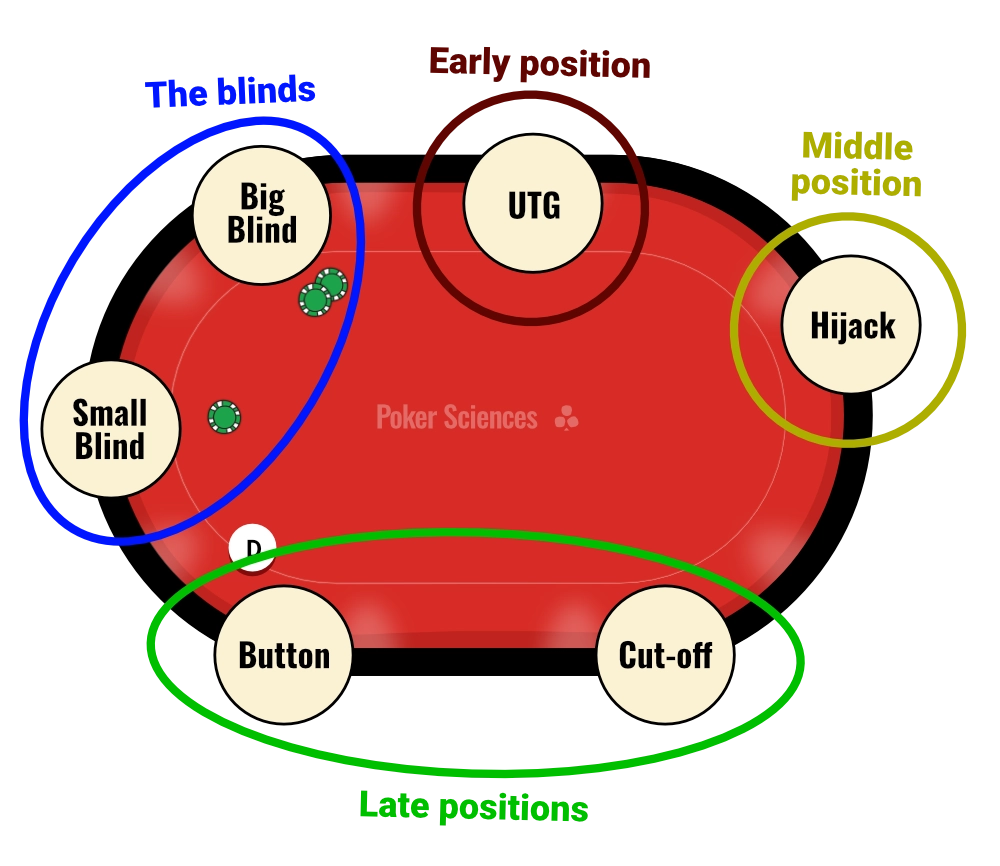
Let’s look at how this works in poker. If you are first to act (under the gun), you can either bet and risk getting re-raised, or check and risk appearing like you have a weak hand. Either way, you are much better off being last to act (button/dealer), when you can see what everyone else has bet, and then choose to call, fold or raise. The last player has a big informational advantage.
The recent movie F1 dramatizes this principle perfectly. At one point, Sonny Hayes (protagonist, played by Brad Pitt) appears to have suffered a malfunction in his car, due to which he is still stuck on the starting grid, while other cars have already left for the formation lap. Turns out, there was nothing wrong with the car. It was a deliberate, strategic masterstroke by Hayes — by leaving last, his car had the warmest tires when the formation lap ended, since the other cars had halted so their tires cooled off. In this case, Hayes’ advantage stems not from information but from commitment — the other drivers have no way to warm up their tires instantly.

This principle of weaponizing the timing extends beyond high-stakes competition and into the crafts of persuasion and investing.
When legendary investor Rakesh Jhunjhunwala met Titan managing director Bhaskar Bhat for the first time, he requested the last meeting of the day, so that Bhat wouldn’t be in a rush to leave for another meeting, and they would be able to speak for longer.
Gyanvatsal Swami, the great motivational speaker, prefers to be the last speaker at any conference — this way, he can listen to all the other speakers before him, and mention their ideas in his own speech.
Which brings us back to xAI. Seen through the lens of the last mover, their recent surge isn’t surprising — it’s strategic. xAI wasn’t the first frontier LLM company from the US, but it may well be the last (alongside OpenAI, Google, Meta and Anthropic). By launching after the doors had started closing, they’ve not only caught up with the best models but also appear to be improving much faster than peers.
The lesson of the last mover advantage is not to be slow, but to be deliberate. It teaches us to see every decision not as a race to be first, but as a strategic chess match where the final move is often the only one that counts.
In your next project, poker game, or investment, ask yourself: How can I gather more information before I act? And how can I time my final move to create an irreversible advantage? Don’t just play the game — study the endgame.
Feedback and reading recommendations are invited at malhar.manek@gmail.com